Documents needed to sell a house in the Netherlands
The documents needed to sell a house in the Netherlands depend on the property type, mortgage position, apartment association and buyer questions.
Use this page to prepare the practical paperwork before the sale process becomes busy.
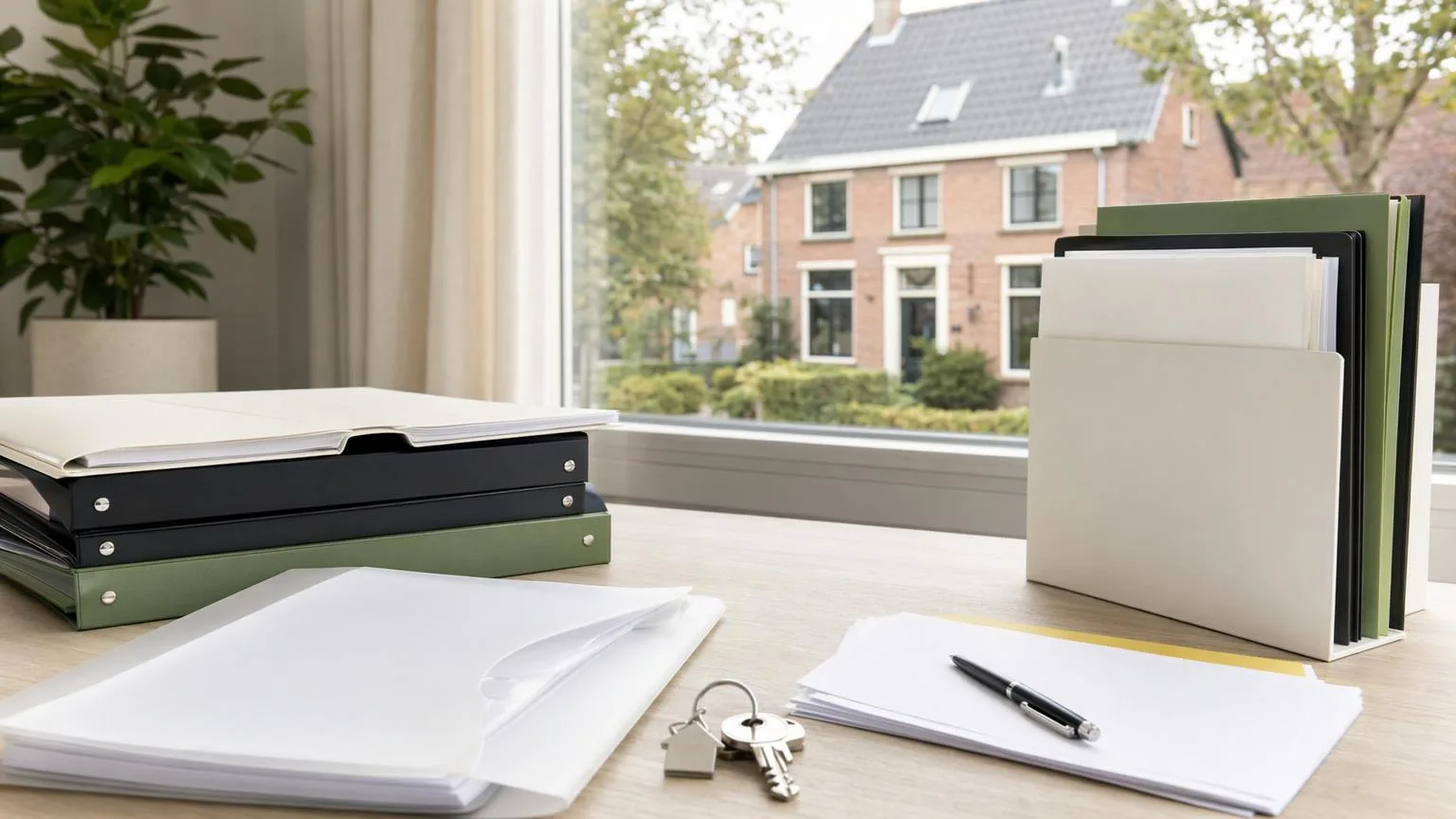
Most sellers should start with identity details, proof of ownership or purchase documents, mortgage information, energy label information, maintenance and renovation records, known defect notes, and any apartment/VvE documents if the property is part of an owners’ association.
The exact document list depends on the property and sale situation. Treat this as a preparation guide, not legal advice.
Core documents to find first
A seller conversation is easier when the basic paperwork is already close by. You do not need everything before asking a first question, but you should know what you have and what is missing.
Make sure the legal owner or owners can identify themselves and are ready to sign documents when needed.
Look for the deed or purchase documents you received when you bought the home.
Collect the lender name, reference if available, and any information about repayment or cancellation.
Check whether the home already has a valid definitive energy label.
Identity and seller authority
Make sure the legal owner or owners can identify themselves and are ready to sign documents when needed.
If the property involves inheritance, divorce, joint ownership, a company owner or someone selling from abroad, ask early what extra proof or signatures may be needed.
Proof of ownership and property details
Look for the deed or purchase documents you received when you bought the home. These help confirm what is being sold and can help answer property-boundary or ownership questions.
Kadaster and the notary process matter because the final ownership transfer is recorded through the land register.
Mortgage information
If there is a mortgage on the home, collect the lender name, mortgage reference if available, and any information about repayment or cancellation.
You do not need to solve every mortgage question before asking for selling help, but you should know whether the mortgage may affect timing or proceeds.
Energy label
Check whether the home already has a valid energy label. When owners sell or rent a property, they must provide buyers or tenants with a definitive energy performance certificate.
If the label is missing or outdated, arrange it early so it does not delay listing or buyer questions.
Maintenance, renovations and defects
Collect maintenance records, renovation invoices, warranty documents, inspection reports and notes about known defects.
These records help answer buyer questions and reduce confusion later in the process.
Apartment and VvE documents
If you are selling an apartment, prepare VvE documents early. Buyers often want to understand the building, service charges, reserves and planned maintenance.
Useful apartment documents can include:
- VvE service charge information;
- recent VvE meeting minutes;
- annual accounts or budget;
- long-term maintenance plan if available;
- house rules;
- division deed or apartment rights information;
- insurance or building maintenance notes.
You do not need to translate every Dutch term before the first conversation. You do need to know where the documents are.
Buyer-facing forms and Dutch terms
During a sale, sellers are often asked to complete buyer-facing forms or lists. These may cover included items, known defects, building details and property use.
vragenlijstA seller questionnaire about the property and known details.
lijst van zakenA list of movable items and fixtures included or excluded from the sale.
eigendomsbewijsProof of ownership or an ownership-related deed.
energielabelThe energy label or energy performance certificate.
Ask before guessing if a term is unclear, or use the Dutch selling terms glossary for plain-English definitions.
Documents for special situations
Some sales need extra paperwork or advice. Ask early if any of these apply:
- selling from abroad;
- inherited property;
- divorce or shared ownership;
- rented property;
- leasehold;
- company-owned property;
- major renovations or known defects;
- apartment/VvE disputes or large planned works.
These situations can change what the adviser, notary or buyer needs.
Preparation checklist
Start with this practical list:
- ID details for all sellers;
- purchase deed or ownership papers;
- mortgage information;
- current energy label;
- WOZ value if available;
- maintenance and renovation records;
- warranty documents;
- known defect notes;
- VvE documents for apartments;
- leasehold information if relevant;
- recent utility or municipal charge information if requested;
- preferred handover timing.
Keep digital copies together so you can answer questions faster.
If documents are the main blocker, use the contact form and explain what you do and do not have yet.
If the missing document is the energy label, read the energy-label page.
If you want a broader preparation list, use the seller checklist.