Sell before buying a house in the Netherlands
If you are deciding whether to sell before buying a house in the Netherlands, the real question is timing risk.
Selling first can give you more budget certainty. Buying first can give you more control over where you move next. Overlap can work, but only when the sale, mortgage and cash-flow questions are clear.
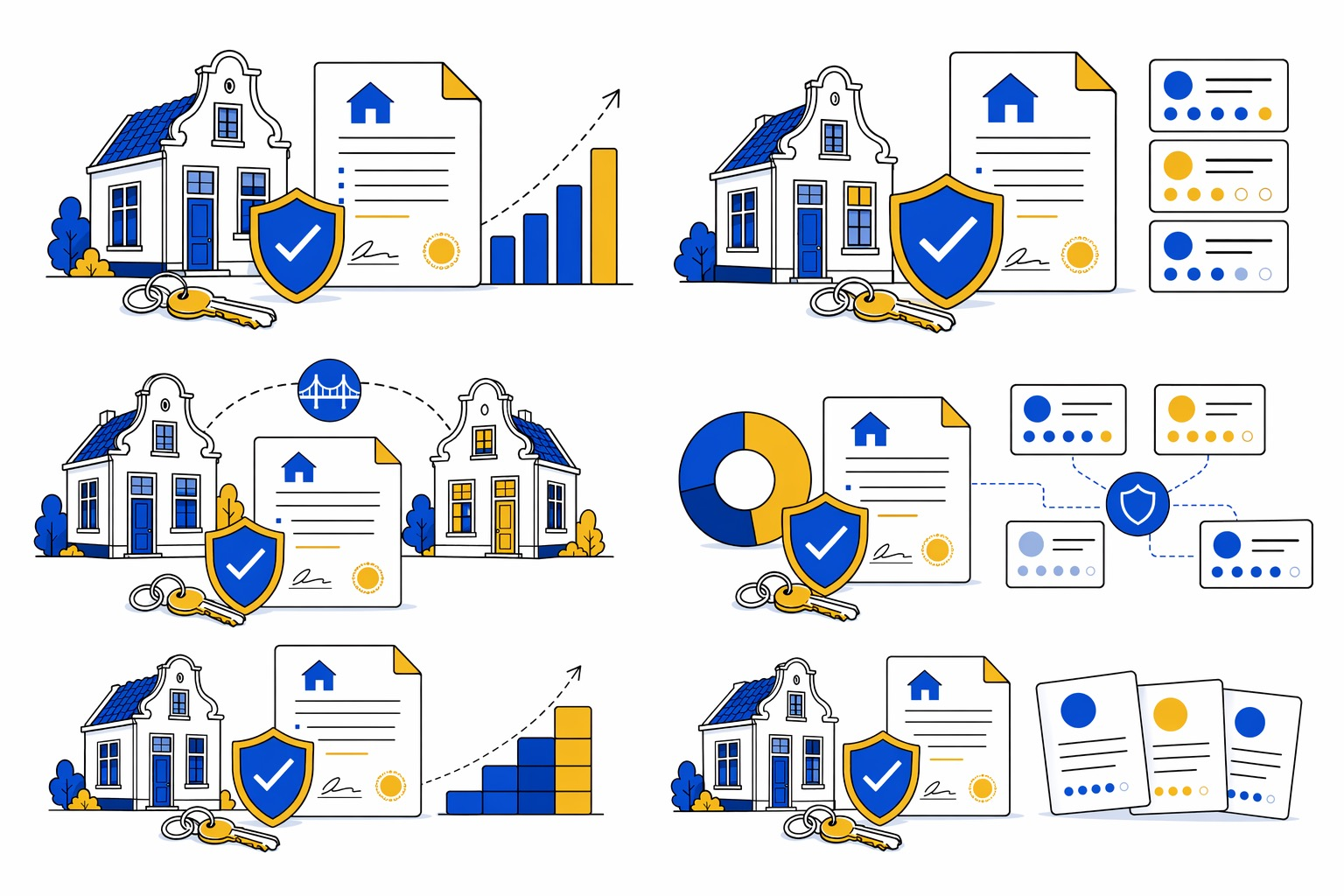
Sell first if you need certainty about sale proceeds, mortgage repayment or whether the current home will sell at the expected price.
Consider buying first only after you understand the current home’s value, likely selling costs, mortgage position, temporary double costs and whether a bridging mortgage is possible for your situation.
The three timing options
There are three practical options: sell first, buy first or overlap both transactions. Each option changes your budget, pressure and negotiation position.
Use this option when proceeds certainty matters more than locking in the next home immediately.
Use this option only when finance, sale expectations and temporary costs have been checked.
Use this option when both transactions are realistic and well prepared.
If value, mortgage or document readiness is unclear, solve the seller side first.
Sell first
Selling first means you agree the current sale before you commit to buying the next home. This can make the budget clearer and reduce the risk of owning two homes at once.
The tradeoff is practical. You may need temporary housing, a flexible handover date, storage or a fast next purchase.
Buy first
Buying first means you secure the next home before the current home has sold. This can help if the next home is hard to find or if you need certainty about school, work or relocation timing.
The risk is financial. You may have two homes, two sets of costs, and sale proceeds that are still uncertain.
Overlap both transactions
Overlap means the sale and purchase run close together. It can be efficient when the current home is sale-ready, value expectations are realistic and the buyer/purchase chain is stable.
It becomes risky when documents are missing, the asking price is optimistic, the mortgage position is unclear or the next purchase depends on money that has not arrived yet.
What a bridging mortgage means
The Dutch term is overbruggingshypotheek or overbruggingskrediet.
Consumentenbond describes it as a temporary loan that bridges the period between buying a new home and selling the old home. It is repaid when the old home is sold.
ING also describes a bridging mortgage as relevant when a new home has been bought while the old one has not yet been sold.
This does not mean it is suitable or available for every seller. Ask a mortgage adviser or lender about your own numbers.
What to check before choosing an option
Before you decide, write down:
- expected sale price range;
- remaining mortgage balance;
- likely seller costs;
- energy label and document status;
- how sale proceeds will be used;
- whether you can carry temporary double costs;
- whether you need the sale proceeds for the next purchase;
- how flexible your handover date can be;
- whether temporary housing is possible;
- what happens if the sale takes longer than expected.
AFM explains that mortgage affordability depends on income, home value and mortgage interest. Treat that as a reminder to check the financial side before you rely on a timing plan.
Decision board
Use this board as a first filter before you speak with an adviser.
You need proceeds certainty before buying.
Temporary housing, storage and pressure to find the next home.
The next home is hard to find and finance is clear.
Double costs, bridging risk and sale-price uncertainty.
Both transactions are realistic and well prepared.
Chain delays, mortgage timing and notary coordination.
Seller mistakes to avoid
Do not plan from the asking price alone. Use expected proceeds after mortgage repayment and selling costs.
Do not assume a bridging mortgage will be available. Ask before you make an offer on the next home.
Do not delay documents. Missing VvE, energy label, mortgage or maintenance information can slow the current sale.
Do not merge buyer and seller questions. The seller question is “what must happen to sell my current home safely?” The buyer question is “what can I buy next?”
Related websites for buying and mortgage questions
Use this seller site when the main question is sale timing, current-home documents, valuation before selling, selling costs or the steps toward transfer.
Use Real Estate Minion buying guide when the main question is about the purchase side of the Dutch housing process.
Use Orange Fox when the main question is borrowing power or mortgage scenarios for the next home.
If you are unsure whether to sell first or buy first, start with the current home.
Check value, mortgage position, seller costs and document readiness. Then decide whether the next move depends on certainty, speed or flexibility.
Use the contact form if you want help framing the seller side before you speak with a buyer agent or mortgage adviser.