Notary Transfer When Selling a House in the Netherlands
The notary transfer when selling a house in the Netherlands is the stage where the deed is signed, payment is handled and ownership transfer is registered.

TL;DR: Learn how notary transfer works when selling a house in the Netherlands, including deed, payment flow, mortgage cancellation and key handover.
Summary
The Dutch civil-law notary prepares and executes the deed of transfer, handles the payment flow and submits the deed for registration. After the deed is processed, ownership changes in the public register.
For sellers, the main preparation points are identity, signing, mortgage cancellation, final meter readings, keys and the proceeds statement.
What the notary does
The notary checks the sale documents, prepares the deed, handles funds and coordinates registration. Kadaster explains that real estate transfer uses notarial deeds and cadastral registration.
The seller usually does not register the transfer personally.
What sellers should prepare
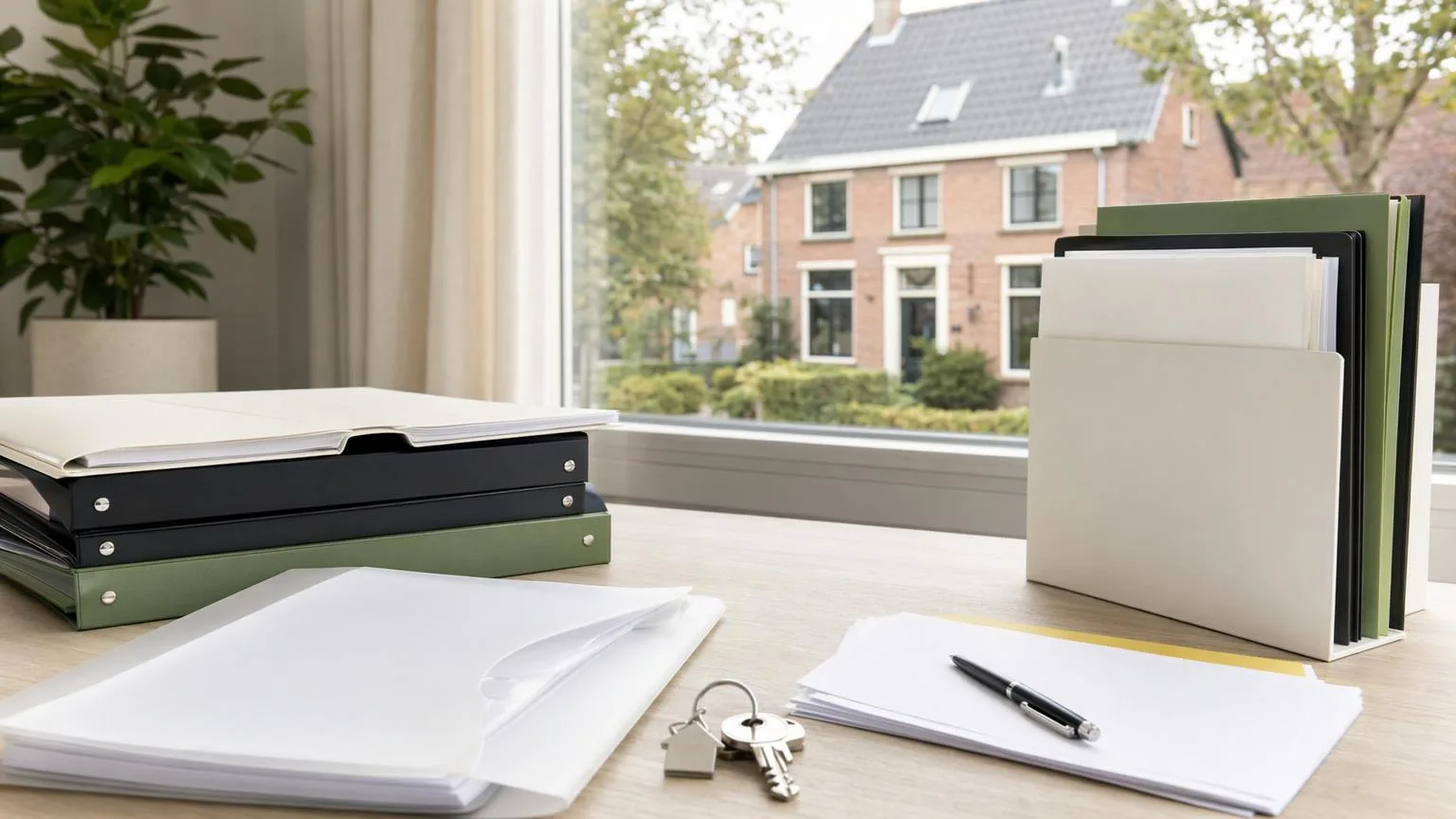
Prepare identification, bank details, mortgage information, keys, access instructions and any agreed items list. If you cannot attend in person, ask early about power of attorney or remote signing options.
- valid identification
- bank account for proceeds
- mortgage cancellation details
- keys and access items
- final meter readings
Mortgage repayment and cancellation
If there is a mortgage, the notary usually handles repayment from the sale proceeds and arranges cancellation of the mortgage registration. Read the mortgage-at-sale guide if this applies to you.
After signing
After the deed is signed and registered, the seller receives the remaining proceeds according to the notary’s settlement process. Keep the final statement for your records and future tax or mortgage questions.
Connected seller checks
This topic should be checked alongside Purchase Agreement When Selling a House in the Netherlands, Seller Proceeds Statement in the Netherlands and Selling With A Mortgage so the documents, buyer answers and timing do not contradict each other.
Start with Purchase Agreement When Selling a House in the Netherlands when you need the closest next step. Understand the purchase agreement when selling a house in the Netherlands, including price, transfer date, conditions, deposit and property details.
Use Seller Proceeds Statement in the Netherlands to keep the related seller file complete before viewings, offer comparison or contract drafting.
If the issue affects price, conditions or timing, read Selling With A Mortgage before you give a final answer to a buyer.
What to check before you act
Ownership transfer runs through the Dutch civil-law notary and Kadaster registration. Kadaster explains that a deed of transfer must be executed by a Dutch civil-law notary and recorded in the land register.
Use this guide as a practical check before you answer buyer questions, compare offers or let the sale move into contract drafting.
- Has the notary received the signed purchase agreement?
- Are mortgage repayment and bank details confirmed?
- Are identity checks and signing arrangements complete?
- Is the key handover tied to the right transfer moment?
Seller file to prepare
A stronger seller file makes the sale easier to explain. It also keeps the same facts available for the agent, buyer, lender, adviser and notary, instead of forcing everyone to rebuild the story from memory.
Keep the file practical. You need enough evidence to answer predictable questions, not a perfect archive of every small household detail.
- notary correspondence and appointment details
- mortgage redemption statement or lender instructions
- final meter readings and key list
- seller proceeds statement and bank account confirmation
Mistakes that make this topic harder
Most problems in this part of a Dutch sale start small. A vague answer, missing date or assumed document can grow into a weaker offer, a wider condition or a delay close to transfer.
Check these points before you accept an offer or let the sale move into contract drafting.
- thinking the sale is complete when the purchase agreement is signed
- leaving mortgage cancellation details until the final week
- handing over keys before the agreed transfer moment
- not checking the final statement because the gross price looks right
When extra help is worth it
Ask the notary early if you live abroad, cannot attend in person, are selling after divorce or inheritance, or need a power of attorney. Signature logistics can take longer than expected.
If you are not sure which option fits, use the contact form and select the option that matches your situation: selling now, valuation before selling or help understanding the process.
Question 1: Has the notary received the signed purchase agreement?
Question 2: Are mortgage repayment and bank details confirmed?
Question 3: Are identity checks and signing arrangements complete?
Question 4: Is the key handover tied to the right transfer moment?
Evidence 1: Add notary correspondence and appointment details to the seller file.
Evidence 2: Add mortgage redemption statement or lender instructions to the seller file.
Evidence 3: Add final meter readings and key list to the seller file.
Evidence 4: Add seller proceeds statement and bank account confirmation to the seller file.
Avoid 1: Watch for thinking the sale is complete when the purchase agreement is signed.
Avoid 2: Watch for leaving mortgage cancellation details until the final week.
Avoid 3: Watch for handing over keys before the agreed transfer moment.
Avoid 4: Watch for not checking the final statement because the gross price looks right.
Related seller guides
FAQ
Can I choose the notary as seller?
The buyer often chooses the notary, but this can vary by agreement. Check the contract.
Do I need to attend transfer day?
Usually signing is needed, but remote or power-of-attorney options may be possible if arranged early.
When do I receive the sale proceeds?
The timing depends on the notary’s settlement process after signing and registration checks.
What should I check before I act?
First answer this: “Has the notary received the signed purchase agreement?” Then check: “Are mortgage repayment and bank details confirmed?”
Which documents should I collect?
Start with notary correspondence and appointment details and mortgage redemption statement or lender instructions. Add anything that supports the answer you will give to the buyer.
What is the biggest mistake to avoid?
A common mistake is thinking the sale is complete when the purchase agreement is signed. Check this before viewings, offer acceptance or contract drafting.
Can this affect the asking price?
Yes. Anything that changes buyer confidence, expected costs, timing or risk can affect price discussions and negotiation space.
Can this delay the sale?
It can if a document, condition, lender check, buyer question or notary request is unresolved close to signing or transfer.
Should I discuss this before accepting an offer?
Yes, if it can affect price, buyer certainty, conditions or timing. Clear answers before acceptance reduce renegotiation risk.
Should this be written down?
Important facts, agreements, exclusions and deadlines should be written down so everyone works from the same information.